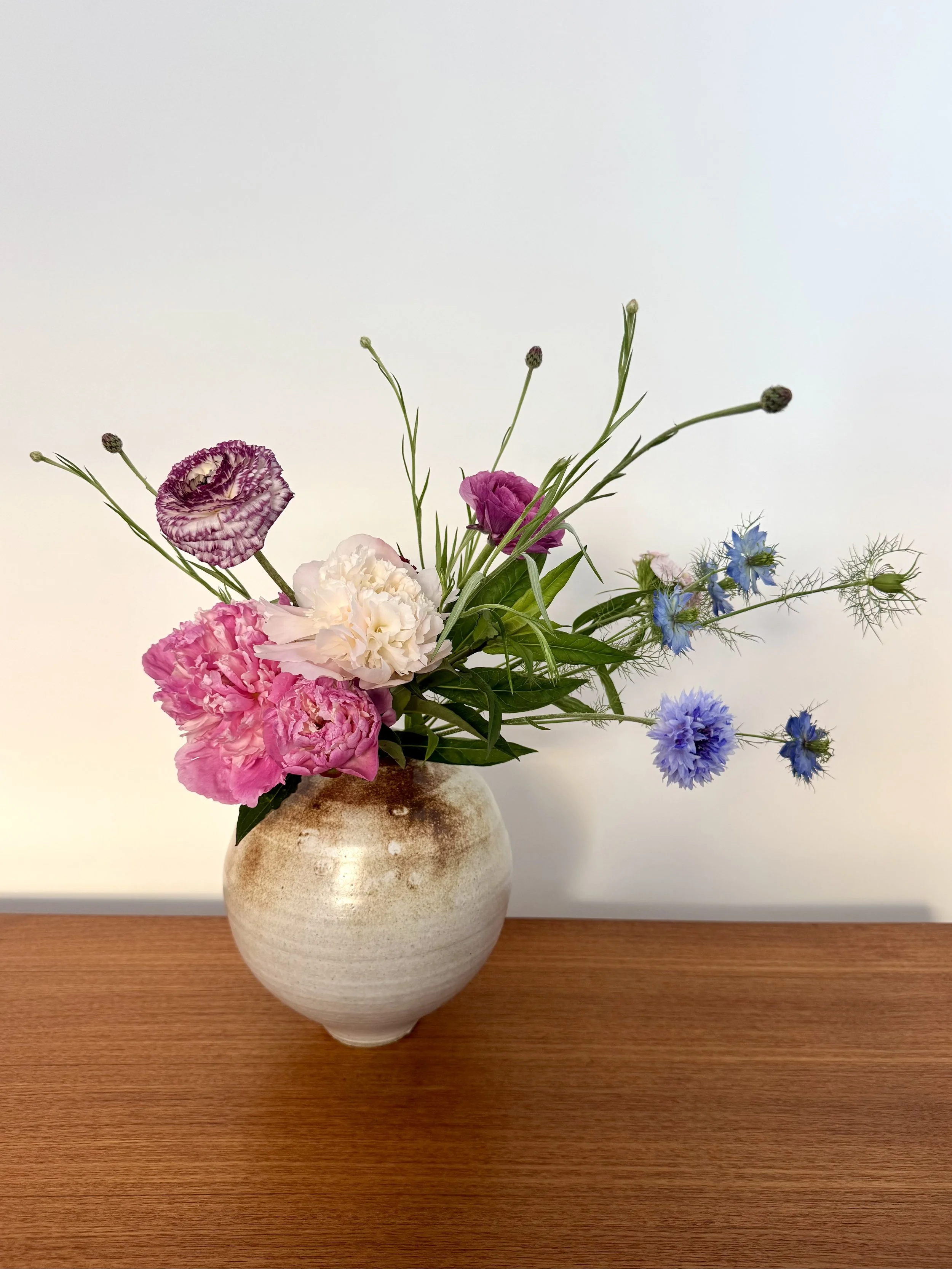
Learn Ikebana in London and Brighton
Ikebana, the traditional Japanese art of flower arranging, is much more than simply placing flowers in a vase. Rooted in centuries of Japanese culture, Ikebana celebrates harmony, balance, and the beauty of nature through carefully considered lines, shapes, and space. Unlike conventional floral design, every stem, branch, and bloom has a purpose, creating arrangements that evoke calm, mindfulness, and artistic expression.
Practising Ikebana encourages us to slow down, observe the changing seasons, and develop a deeper appreciation for the natural world. Whether you are a complete beginner or an experienced flower enthusiast, learning Ikebana can be a rewarding and meditative creative practice.
If you would like to explore this unique art form, there are excellent opportunities to learn in both London and Brighton at the Flower Factory. We offer a variety of classes and workshops including Ohara and Ikenobo traditions, with options ranging from introductory sessions to advanced study.
In Brighton, beginners can discover Ikebana through hands-on workshops and seasonal classes at local gardens that introduce the principles of Japanese flower arranging in a relaxed and welcoming environment.
Whether you are seeking a new creative outlet, a mindful hobby, or a deeper connection with nature, Ikebana offers a beautiful journey of learning and self-expression. Join a class in London or Brighton and experience the timeless elegance of this inspiring Japanese art form for yourself.
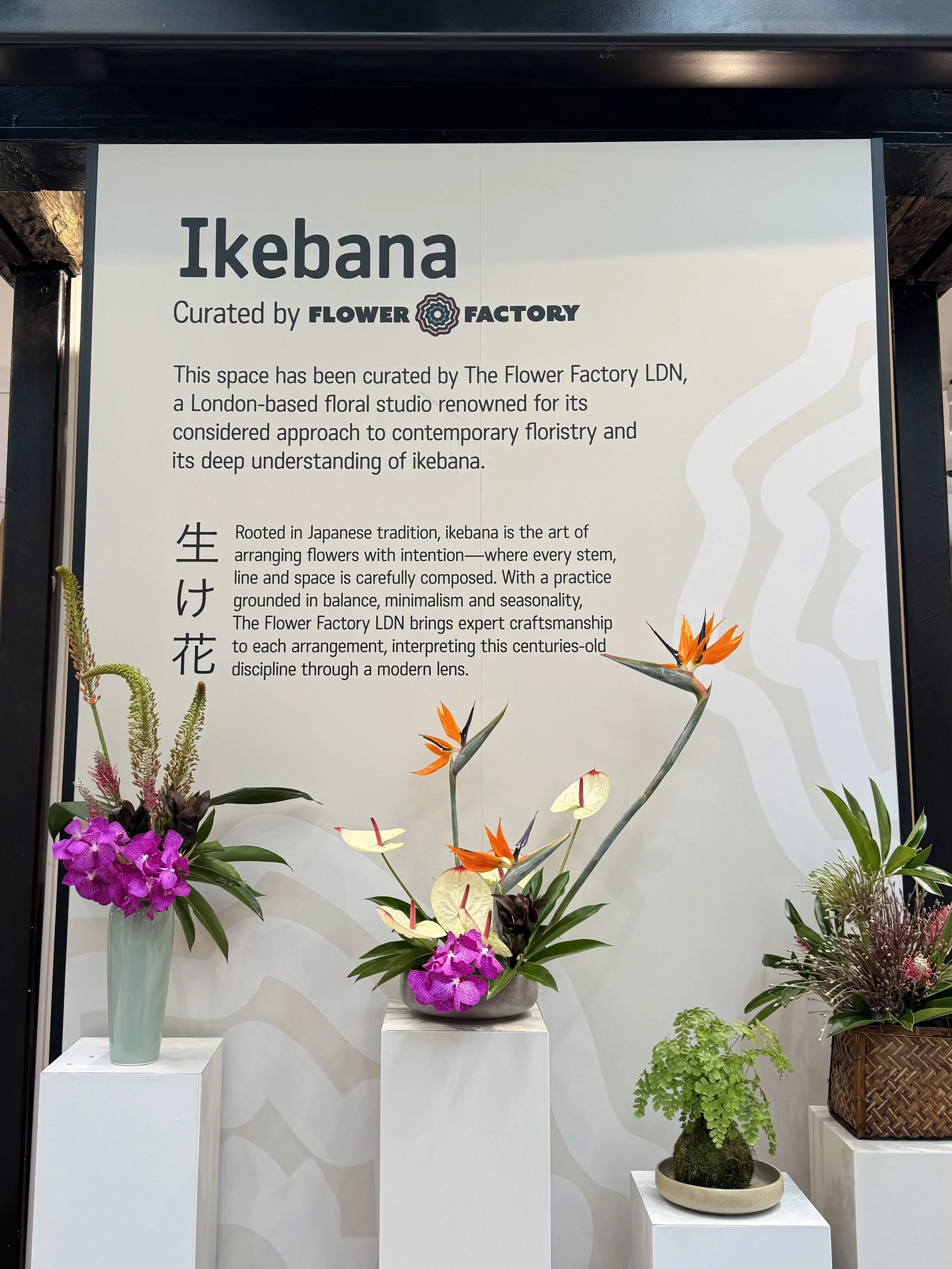
What is Ikebana
Ikebana is Japanese art of flower arrangement, translating roughly to “living flowers” or “making flowers come alive.” Unlike Western floral designs that focus on symmetry and volume, Ikebana uses minimalism, asymmetry, and lines to connect nature, humanity, and space.
Core Principles of Ikebana
Minimalism & Space: Less is more. Empty space (or ma) is just as crucial as the physical branches, leaves, and blooms.
Asymmetry & Balance: Arrangements are typically designed in a triangular, asymmetrical shape representing Heaven, Earth, and Man.
Seasonality: Arrangements are highly impermanent and reflect a specific moment in time. Practitioners use whatever flora is in season, appreciating both the beauty and the decay (wabi-sabi).
Structure & Styles
Materials: Ikebana highlights the entire plant, not just the blossom. Stems, leaves, and twisting branches are just as important as the flowers themselves.
Vessels & Tools: It often utilizes shallow bowls, trays, or unconventional containers alongside a kenzan(a heavy, spiked metal flower frog) to hold stems in place.
Basic Styles: The two most common techniques are Moribana (arranging in shallow dishes) and Nageire (arranging upright in tall, narrow vases).